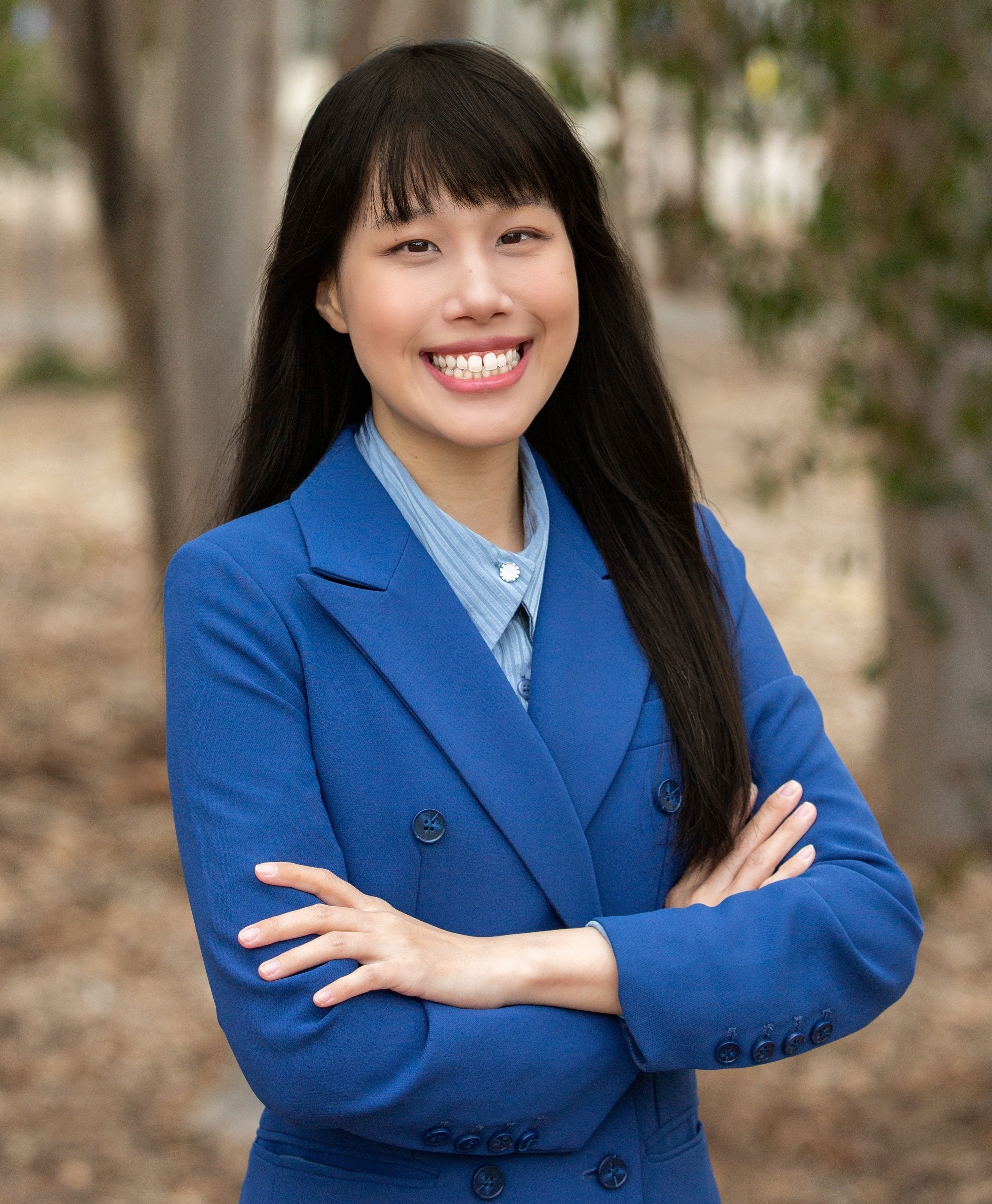
Hello, I'm Ping!
A PhD Candidate in Innovation, Technology & Operations at Rady School, UC San Diego.
My research focuses on designing AI systems and data science platforms that enhance strategic and complex decision-making.
My job market paper studies how data science contests
can unintentionally incentivize suboptimal modeling strategies due to data splitting practices. Further project pipelines explore
the impact of AI feedback and the reliability of LLM evaluations.
I am currently seeking a postdoc or an assistant professor position.
If you happen to know any opportunity or would like to chat about anything else,
feel free to reach out!
Education
PhD in Innovation, Technology and Operations
University of California San Diego, June 2026 (Expected)
• Dissertation: Leveraging AI and Data Science for Business Innovation and Decision Making
• Research Interests: GenAI, Data Science, Digital Innovation, Technology Management
• Methodologies: Machine Learning, Modeling and Game Theory, Lab Experiments
MSc in Statistics
Arizona State University, May 2020
MSc in Management
Arizona State University, May 2018
BA in Economics
Soochow University, June 2016
Research
My research interest lies in the intersections of GenAI, Data Science, Digital Innovation, and Technology Management.
The primary methodologies are machine Learning, modeling and game theory, and lab experiments, which are applied in the following working papers.
1. Designing Data Science Contests: The Role of Training vs Test Splits
• Job market paper, co-authored with Zhe Zhang and Sanjiv Erat
• Under revision for second-round review at Management Science
• Winner, 2025 INFORMS TIMES Best Working Paper Award
• Winner, 2025 POMS PITM Best Student Paper Competition
• Nominee, 2025 Artificial Intelligence in Management (AIM) Best PhD Paper Award
• Featured in SSRN Top Downloads for Innovation & Operations (full paper link)
Abstract: Companies organize data science contests to source innovative machine learning solutions for business operations. The current study formulates a model of data science contests to investigate how participants choose their modeling approaches and the incentives they face in the competition, and reveals how data splitting practices can unintentionally incentivize suboptimal modeling strategies.
2. Human and AI Perspectives in Creativity Evaluation
• Co-authored with Sanjiv Erat
• Forthcoming presentation at the 2026 Annual POMS Conference
Abstract: With AI-based tools improving at an exponential pace, the day is perhaps not far off when management of knowledge work and of knowledge workers becomes just another skill that can be performed by AI supervisors. The current study investigates how a person’s creative performance is affected by the identity of the feedback giver and the nature of the feedback.
3. Splitting the Difference: Automatic Judging of Large Language Models
Abstract: LLM-as-Judge systems now replace costly human raters for benchmarking large language models, yet their reliability is underexamined. The current study analyzes how data splitting and cross validation affect their agreement with human preferences using Chatbot Arena and MT-Bench, guiding the design of scalable and trustworthy evaluation methods for next-generation language models.
Teaching
1. Instructor
University of California San Diego, July 2024 – August 2024
• 2025 UC San Diego Academic Senate Excellent Teaching Award
• Course title: Business Project Management (syllabus link), 100% student rating
• Content: Managing projects and related business dynamics with AI and trending software based on real-world applications
• Software: ChatGPT, Radiant, Microsoft Excel Gantt Chart
2. Teaching Assistant
University of California San Diego, September 2020 – Present
• AI-Assisted Customer Analytics (core in MSc in Business Analytics program)
○ Content: Applying machine learning to collect, analyze, and act on customer data and create value for both customers and firms
○ Software: ChatGPT, Python, R, Radiant, Docker
• Business Analytics (core in MSc in Business Analytics program)
○ Content: Making good decisions in complex business problems with statistical and quantitative models such as decision analysis, regression analysis, optimization and simulation
○ Software: Python, R, Radiant
• Operations, Information Systems and Data Analysis (core in MBA program)
○ Content: Synthesizing information and applying operational metrics for systematic design, business execution, and improvement of operations and partner relationships
○ Platform: Littlefield Simulation
• Supply Chain Analytics (elective in MSc in Business Analytics program)
○ Content: Understanding and managing the flows of materials and information in a supply chain
○ Topics: Newsvendor, Inventory Control, Demand Forecasting, Revenue Management
• Applied Market Research (elective in MBA program)
○ Content: Conducting research projects for data-driven decision making using surveys, interviews, and advanced tools such as adaptive conjoint analysis
○ Software: Radiant, Sawtooth